

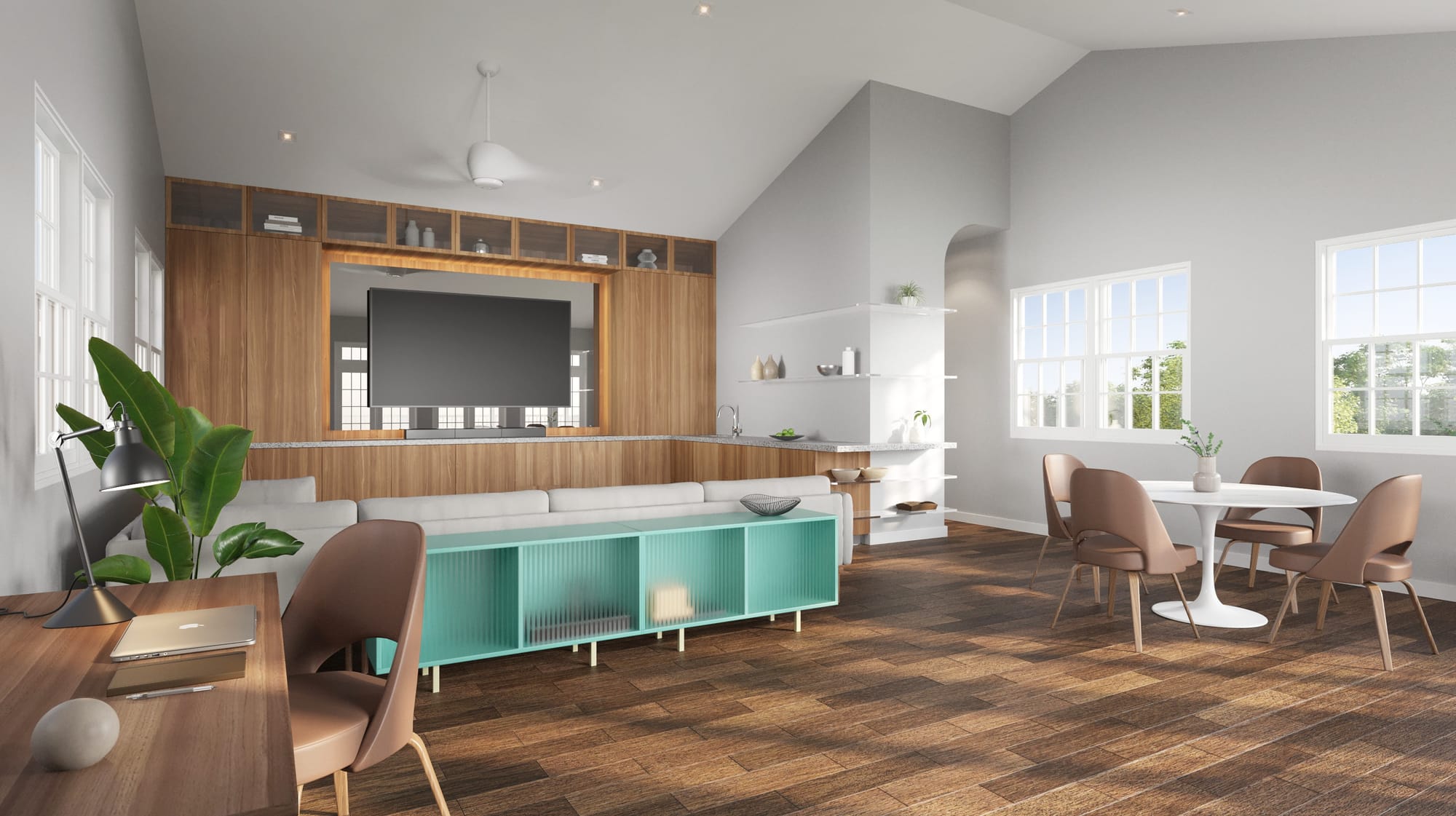
Project Detached Addition, Private Residence
Location Rock Hill, South Carolina
Architect Jamie Moshe Straz, AIA; Studio 3
Photography by Ivan Conor Photography
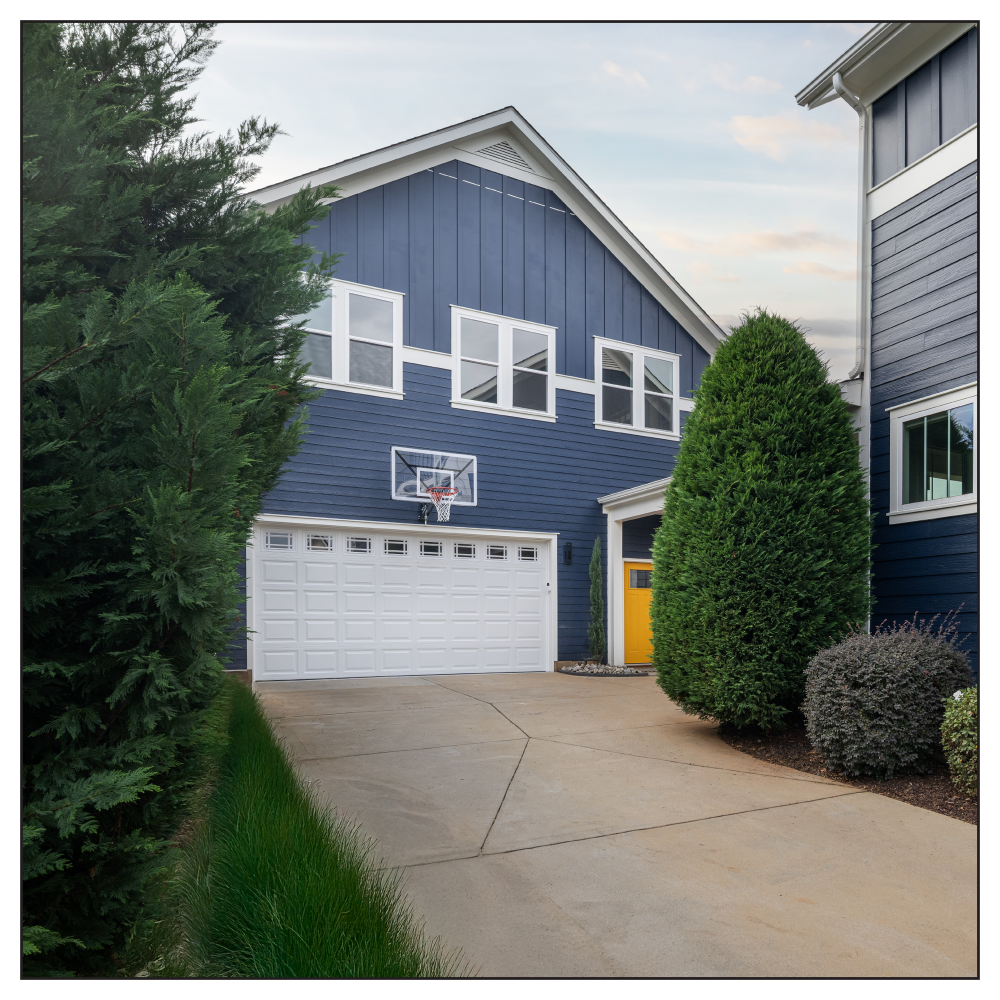
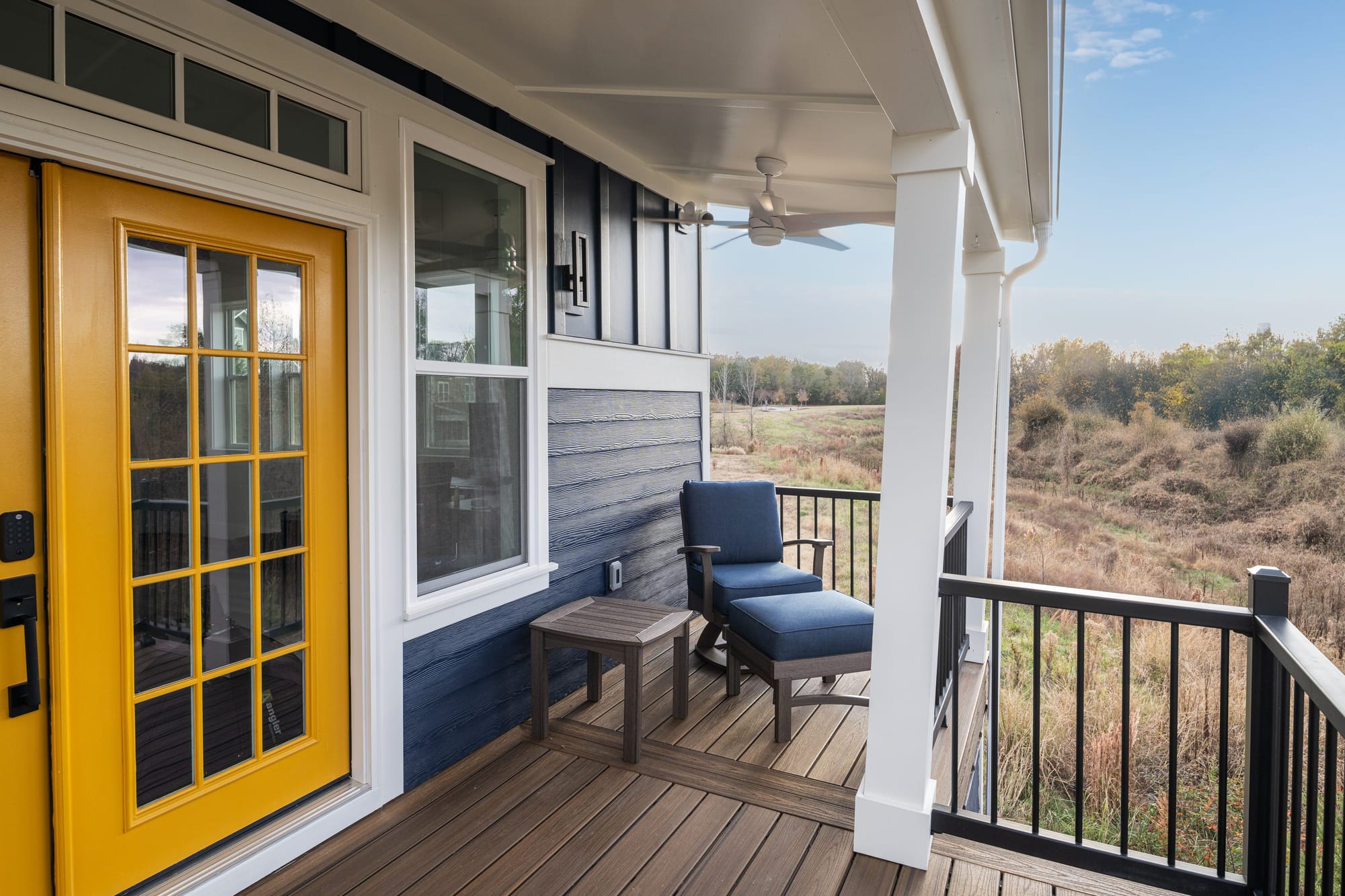
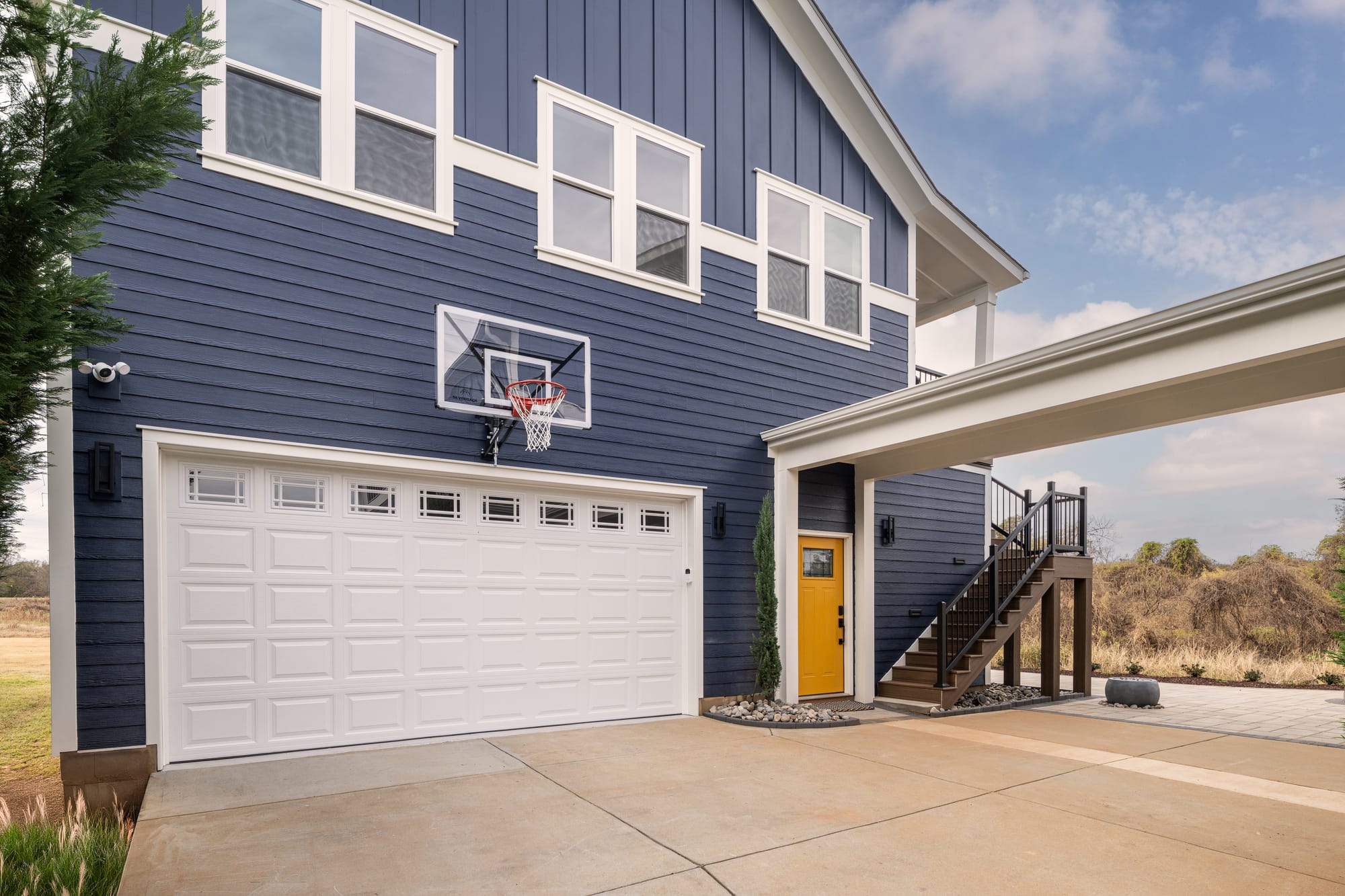
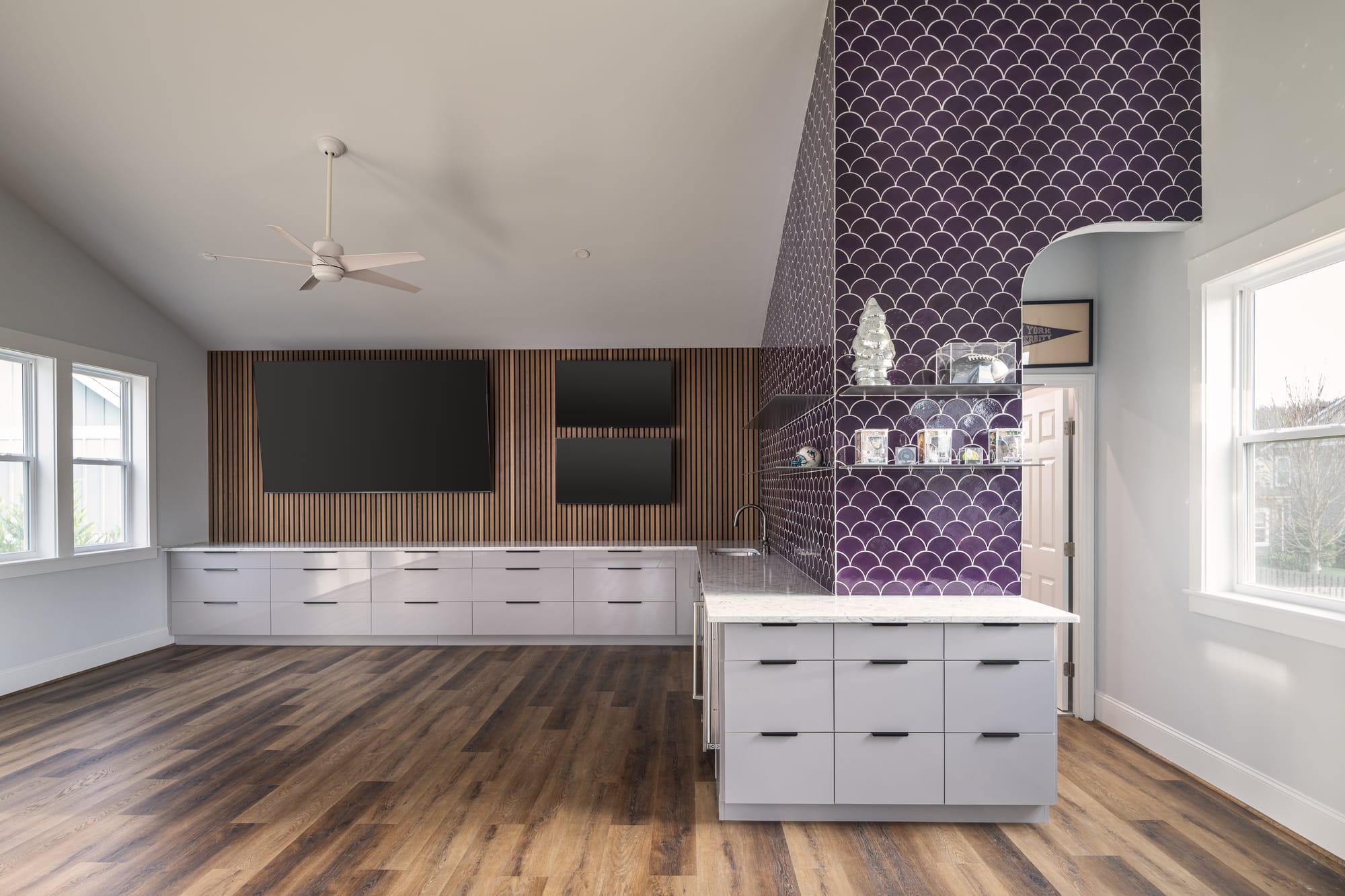
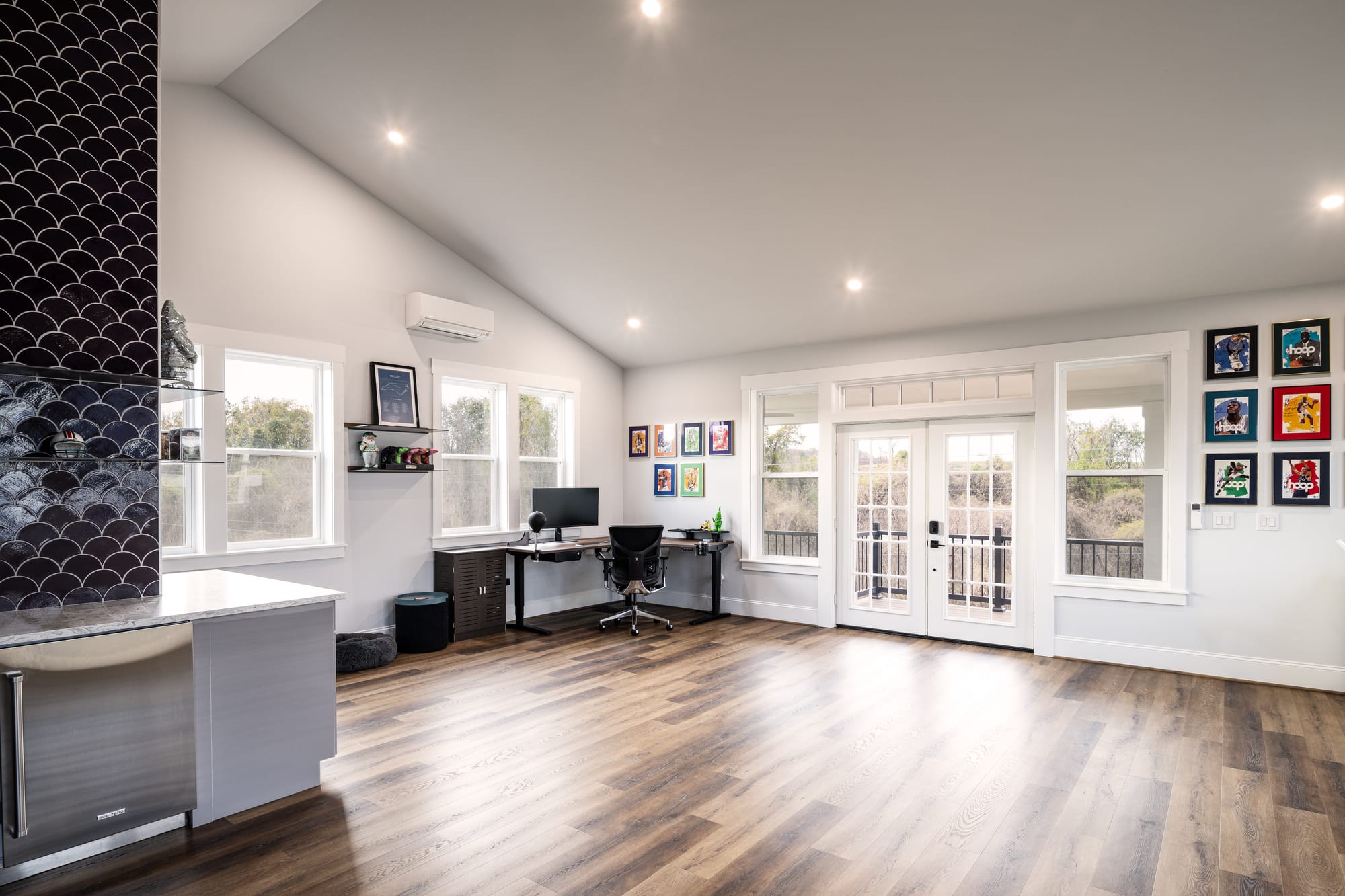
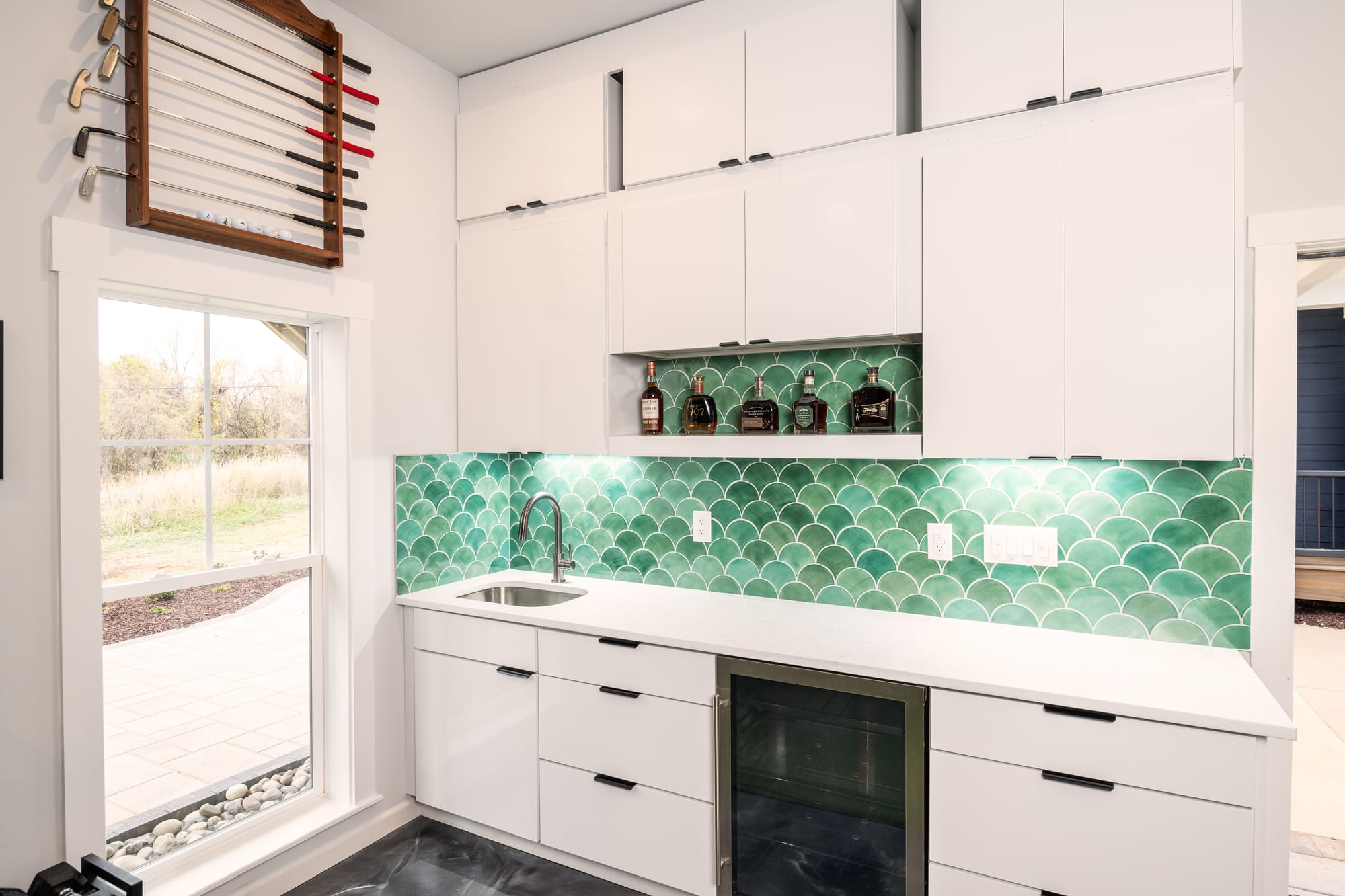
The family came to us looking to replace their existing single story garage with more usable space. At the time, in a recently post-COVID world, having a separate home office had become part of the routine. Not something anyone planned for, just something that happened and stayed. To be able to work from a space that does not require any commuting while still being present for your family changes how you move through the day. On their wish list was a home gym with a golf simulator, more storage, and a guest suite that could double as extra living space when the house needed room to breathe. We were able to get it all in. The balcony on the second floor was a bonus we saw in the massing that gave the upstairs a real outdoor connection.
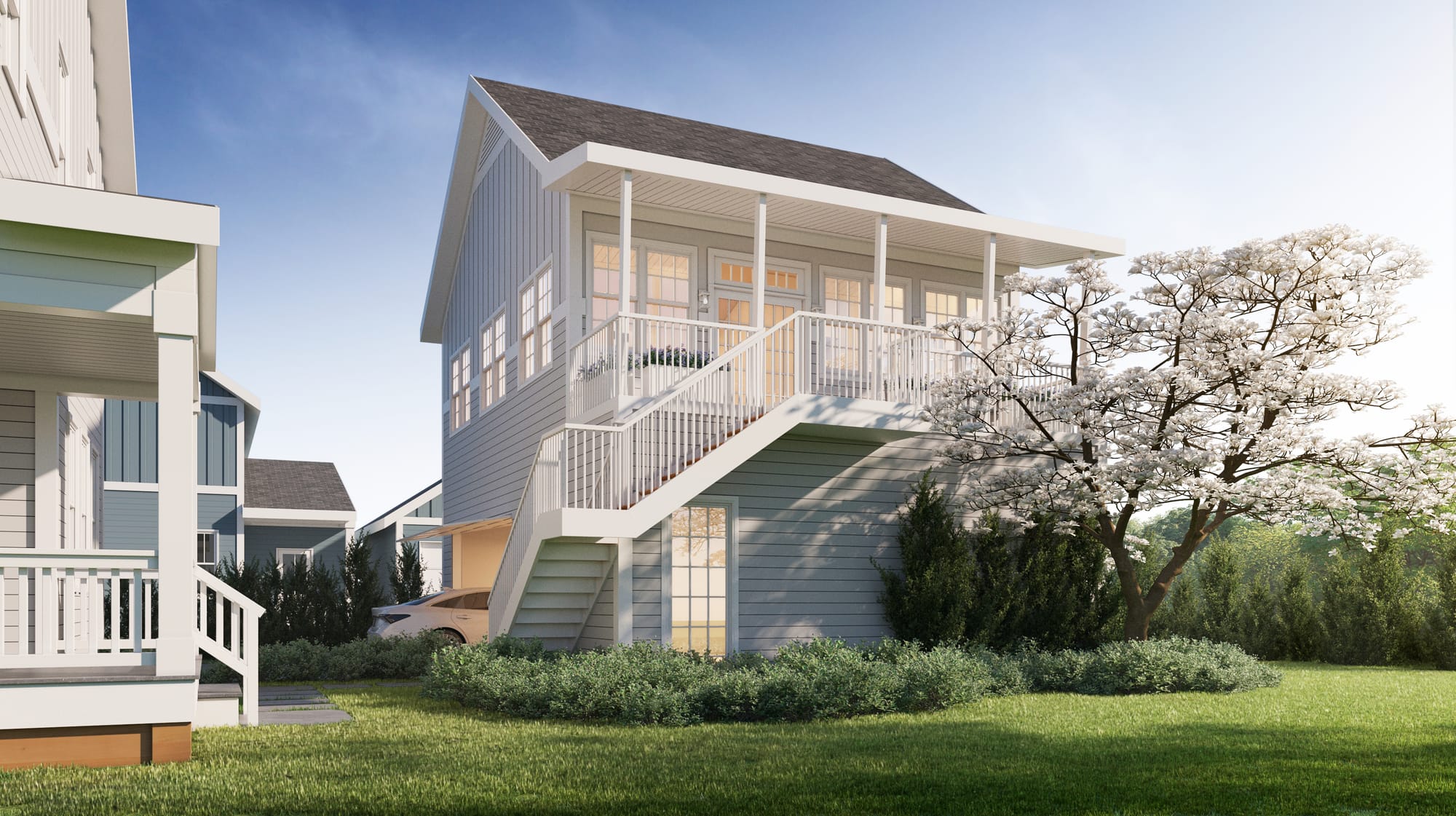
The property sits in a planned development where the homeowners association requires new construction to match the existing house. So the palette was set for us. What we could suggest was how to take the existing design language of the main house and reorganize it into something that felt familiar while reading a little differently. Clearly a secondary structure in use, clearly part of the same property when you see the two together.
The lot is an end lot with open views toward a utility corridor that runs along the property line.¹ Nothing is getting built in that direction. That made the decision to add the balcony even easier, a view that is never going away. By putting the stairs on the exterior we were also able to maximize the usable interior space on both floors.
The breezeway
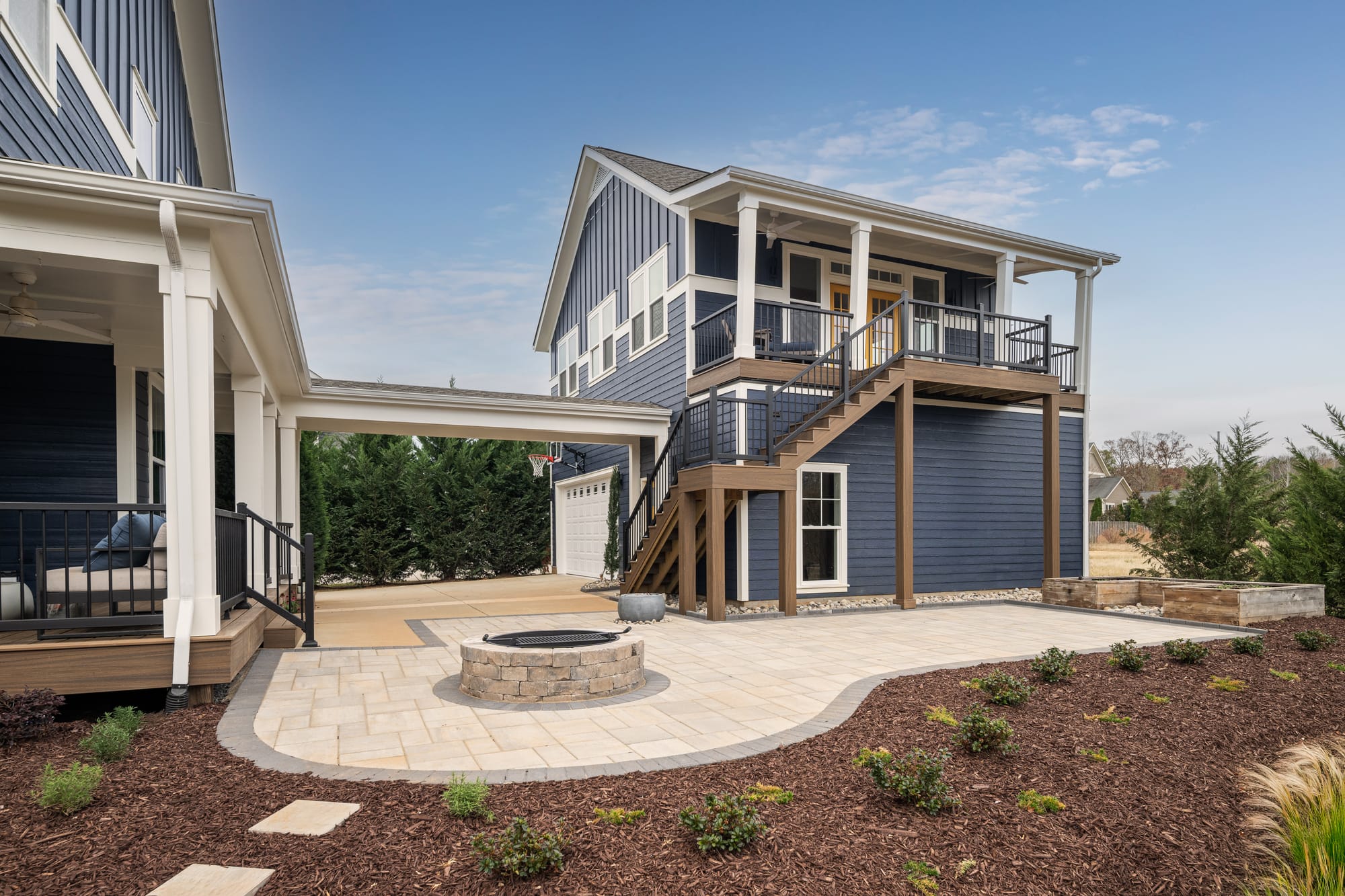
Between when we started the project and when we went to permit, a zoning issue came up. We had been told early on to follow the master plan for the development. By the time the permit was reviewed, a different set of rules was applied. The two contradicted each other, and the city worked with us to find a solution: connecting the addition to the main house with a breezeway, which reclassified the building as part of the primary residence.
This was not something we wanted to do. We did not have a need for a breezeway in the design, and incorporating one was more complicated than it sounds. It came out of a zoning conversation, not a design decision. The existing house had a covered rear porch, so we extended it toward the addition, carrying over the existing language of the porch and tying the two structures together. Once connected, the classification issue went away and the permit went through. The breezeway, like the balcony, became another bonus that nobody asked for.
What none of us expected was how much it would change how the family uses the property. The covered space between the two buildings, the porch, the area under the second floor balcony, the exterior stairs with their canopy overhead. All of it became real outdoor living space. The family uses it more than almost any room inside either building. It became their bonus favorite part of the house.
A requirement we did not want ended up producing one of the most unforeseen and genuinely well received spaces in the entire project.
The collaboration
This was a project where the family was hands on with their builder throughout construction. We worked on the big picture suggestions that ultimately formed the parti² for the project: the massing, the code resolution, the breezeway, the balcony, the relationship between the two buildings. From there we gave them the tools to make the best decisions for themselves. They took that framework and layered their own vision on top of it with their contractor, adapting finishes and details for how they actually wanted to live in the space.
That is how some projects work. We gave them the structure and the ideas. They brought it to life on their terms. What could have been a simple garage replacement turned into something with real thought behind it.
The in-between space, the covered porch that only exists because of a code issue we had to solve, is arguably the oldest idea in Architecture.
Notes
¹ Utility corridors are easements reserved for major electrical transmission infrastructure. They require open land beneath the lines, which means the adjacent property will always have unobstructed views in that direction. For end lots like this one, it is a permanent open landscape that no future development can touch.
² Parti is an Architectural term borrowed from the French parti pris, meaning "decision taken." It refers to the central organizing idea behind a design, the big move that everything else follows from. Think of it less as a blueprint and more as a guidebook. The construction drawings are the permit set, but as anyone in residential construction knows, changes come up in the field. The parti is what keeps those changes aligned with the original intent. For a deeper look at how parti and spatial organization work in Architecture, Francis D.K. Ching's Architecture: Form, Space, & Order (https://www.amazon.com/dp/1119853370?tag=studio3spac02-20) is the standard reference.
Photography by Ivan Conor Photography